• Skip to main content
  • Skip to footer

Elite Accounting

Chartered Accountant | Small Business Accountants in New Zealand

09 393 7025

  • Services
    • Accounting and Tax
    • Audit and assurance
    • Advisory
    • Bookkeeping & Payroll
    • Small & Medium Business
    • Tax Review & Audit
    • Financial Supervisor
    • Custom Services
  • Packages
  • Industries
  • Resources
    • Blog
    • Free Xero
    • Resources
  • About Us
  • Contact Us

IRD Due Dates

resources

Oct 12 2022

Provisional & Income Tax Payments – March Balance Date without EOT
January 15th:Provisional tax second instalment
February 7th:Terminal tax payment (if any)
May 7th:Provisional tax third instalment
July 7th:IR3 return due to be filed
August 28th:Provisional tax first instalment
GST Due Dates

March Balance dates – Two Monthly GST

January 15th:GST return and payment for the period ended November
February 28th:GST return and payment for the period ended January
May 7th:GST return and payment for the period ended March
June 28th:GST return and payment for the period ended May
July 7th:IR3 return due to be filed
August 28th:GST return and payment for the period ended July
October 28th:GST return and payment for the period ended September

March Balance dates – Six Monthly GST

May 7th:GST return and payment for the period ended March
October 28th:GST return and payment for the period ended September
PAYE 

PAYE – for employers deducting less than $500,000 in PAYE

PAYE payment and employer monthly schedule due on the 20th of the following month
Fringe benefit tax (FBT) – filled quarterly
January 20th:FBT quarterly return and payment for period October to December
May 31st:FBT quarterly return and payment for period January to March
July 20th:FBT quarterly return and payment for period April to June
October 20th:FBT quarterly return and payment for period July to September

Written by Elite Accounting · Categorized: Other Topics & Links

Oct 12 2022

If you are operating an Uber or a Rideshare business, you need to be aware of your tax obligations under the Income Tax Act 2007.

Income Tax

Like any other independent contractor you are liable for income tax on your profits. Uber and other rideshare companies do not deduct and pay income tax on your behalf therefore you might have a large tax bill at the end of the financial year. You are required to file an individual income tax return (IR3) with IRD, outlining your income and all expenses. For these reasons it may be best to take professional advice even before the end of the financial year.

GST

You only need to register for GST if your gross revenue/turnover is over $60,000 per year, or your prices include GST. However you may register for GST voluntarily. This can be useful in situations where your business is operating at a loss.

According to Uber because of new GST rules effective 1 October 2016, Uber is required to charge an additional 15% GST on the Service Fee to non-GST registered partners. This is why the Service Fee percentage is 28% for non-GST registered partners and 25% for GST registered partners. The advantage is that if you are not GST registered, you will not need to remit 15% GST on your gross trip fares to the IRD

Not sure if you need to register for GST or need to file your tax returns, contact us.

Written by Elite Accounting · Categorized: Other Topics & Links

Oct 12 2022

The Taxation Act 2006 introduced a tax exemption for transitional residents. The exemption is available to people coming to live in New Zealand on or after 1 April 2006 for the first time or after an extended absence. It lasts for four years after migration and covers most types of foreign income.

Available to

People becoming tax residents in New Zealand on or after 1 April 2016 and are new migrants or returning New Zealanders who have not been resident for tax purposes in New Zealand for at least 10 years prior to qualifying as a tax resident in New Zealand may qualify for a temporary tax exemption on some of their foreign income.

Features of the Temporary tax exemption
  • The temporary tax exemption for foreign income is for 4 calendar years (up to 49 months). The exemption starts on the first calendar day of the month you qualify as a tax resident in New Zealand and ends on the last calendar day of that month four years later.
  • The exemption can only be granted once in a lifetime.
Types of exempt foreign income

The following types of foreign income are temporarily exempt from tax in New Zealand.

  • Controlled foreign company (CFC) income that is attributed under New Zealand’s controlled foreign company (CFC) rules.
  • Foreign investment fund income that is attributed under New Zealand’s foreign investment fund (FIF) rules (including foreign superannuation).
  • Foreign income subject to non-resident withholding tax (for example on foreign mortgages).
  • Foreign income subject to approved issuer levy (for example on foreign mortgages).
  • Income arising from the exercise of foreign employee share options.
  • Accrual income (from foreign financial arrangements).
  • Income from foreign trusts.
  • Rental income derived offshore.
  • Foreign dividends.
  • Foreign interest.
  • Royalties derived offshore.
  • Income from employment performed overseas before coming to New Zealand, such as bonus payments.
  • Gains on sale of property derived offshore (held on revenue account).
  • Offshore business income (that is not related to the performance of services).
  • When your tax exemption ends after 4 years (up to 49 months), you must declare all foreign income on your annual income tax return (IR3 for individuals).
Foreign income that is not tax-exempt

Not all types of income are exempt under these rules. Employment income from overseas employment performed while living in New Zealand or Business income relating to services performed offshore is taxable and must be declared on your IR3 Tax Return.

Written by Elite Accounting · Categorized: Other Topics & Links

Oct 12 2022

  • Are you a small business owner?
  • Do you have to invoice on the go?
  • Do you have limited time to do your books?

If any of the above is true for you then Xero might be for you.

Xero is a cloud accounting software which is designed to make small business accounting easier. It is built with the user in mind. While other software’s tend to be more “accountants” software they normally lack the user friendly features which Xero seamlessly incorporates. Suddenly Xero makes sense of all the numbers from a user’s perspective. You don’t have to be an accountant to be able to use Xero, it is so simple that anyone who knows how to use apps on a mobile phone or anyone who can use emails on a pc can use Xero.

So how exactly does Xero make life easier?

The main features of Xero are:

Automated Bank Feeds: Xero links to your bank account and hence receives your bank statement lines automatically. You can reconcile from anywhere – even from bed with our mobile app.

Online Invoicing: Connect seamlessly with customers through online invoicing and receive updates when an invoice is opened. Create professional recurring invoices and schedule bill payments.

Xero can even follow up overdue invoices automatically through its invoice reminder feature.

Payroll: PAYE tax rates are updated automatically and superannuation is a breeze. Leave management and the employee portal provide a complete picture of your payroll.

Mobile Access: Run your business anywhere, from any device. Check balances, upload receipts and invoice customers while you’re at lunch. Run your business and access your accounts from work, home, or on the go.

Free & Automatic updates: Software updates are automatic and seamless. Every 3–6 weeks we release innovative new features and enhancements based on ideas from our customers.

Unlimited users: Add as many users as you want – it’s free. Work together as a team on financials. Collaborate online with your accountant and bookkeeper to get the advice you need. Invite an unlimited number of people for free.

700+ add-on applications: You’re spoilt for choice with applications like inventory, invoicing, time tracking and expenses. They integrate with Xero to save your business time and money.

Thinking of switching to Xero?

Elite Accounting is a Xero Partner. We provide Xero Setup and Staff Training. We can also takecare of all you bookkeeping and accounting needs.

Written by Elite Accounting · Categorized: Other Topics & Links

Oct 12 2022

Majority of taxpayers comply with our self assessment based tax system and report correctly their true financial position. However mistakes can be made inadvertently and remain undiscovered for a sometime.

Weather you have made a mistake and omitted some income or expenses inadvertently or you may cut corners or not fully disclose your income to the IRD you can make a voluntary disclosure. A voluntary disclosure tells the IRD what is wrong with your tax returns before the IRD find it out themselves through an audit or review.

Anyone can make a voluntary disclosure – salary or wage earners, individuals, businesses, trusts and employers.

How does a voluntary disclosure help?

Often what may seem to be trivial omissions at first can collectively become a serious issue. The longer you leave your under-paid tax undeclared, the more likely you are to be caught out and the less favourably the IRD will look on your case.

You will also be hit with a number of penalties and interest charges, criminal prosecution, liquidation of you business and bankruptcy are on the cards as well depending on the seriousness of the case.

By doing a voluntary disclosure you are showing the IRD your willingness to put things right. According to the Standard Practice Statement 09/02a voluntary disclosure that is made under section 141G or section 141J of the Tax Administration Act 1994 is eligible for a shortfall penalty reduction provided;

A taxpayer can make a full voluntary disclosure either before the taxpayer is first notified that a tax audit is pending (“pre-notification disclosure”), or after the taxpayer is first notified of a pending audit but before the audit starts (“post-notification disclosure”).

In Summary

It’s always better to set your tax matters straight before the IRD find out. It not only saves you money but will certainly save you a lot of sleepless nights. Speak with your financial advisor/accountant or contact us if you are in a situation which requires a voluntary disclosure or if you are not sure if you require a voluntary disclosure. Call us for a confidential discussion and we can advise you on the best course to take.

Written by Elite Accounting · Categorized: Overdue Tax

Oct 12 2022

We often hear about people getting big tax refunds and some tax refund companies advertise this so vigorously that it creates the perception that everyone on salary or wages is owed a tax refund by the IRD and can get it.

However this might not always be the case and if you have been issued a PTS (personal tax summary) or have requested a PTS which results in tax to pay. Well you have to pay it.

So how do can we reduce the chances of having to pay tax at the end of the tax year.

If you earn salary or wages or are on a benefit

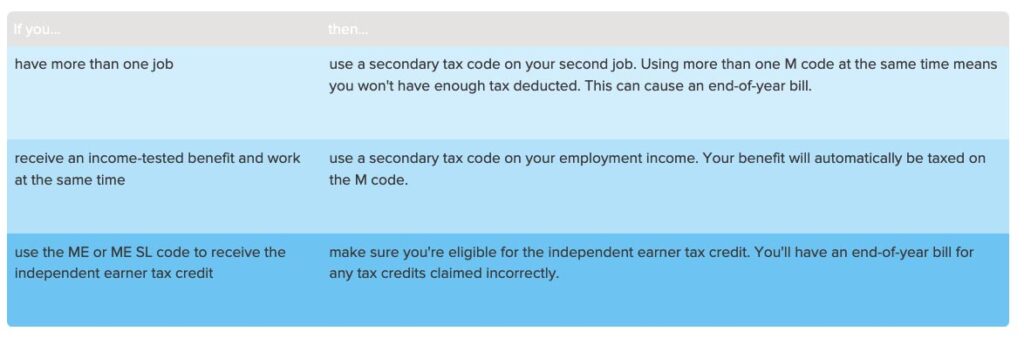
To reduce your chances of having a bill to pay next year make sure you use the right tax code. Your tax code is important because it helps your employer know how much tax to deduct from your income.

​If you’re self-employed or earn business income

To reduce your chances of having a bill to pay next year plan ahead to pay your income tax. The amount of income tax you’ll have to pay is based on your net profit for the year. It’s a good idea to use a separate bank account to put money aside to cover the income tax you’ll need to pay.

If you pay provisional tax during the year make sure you use the right calculation option for your situation and make your payments on time.

If you follow the estimation option, be careful when estimating the amount you pay. Remember to re-estimate whenever your income or situation changes.

If you aren’t required to pay provisional tax, your income tax assessments will always come at the end of the year.

Having trouble paying your provisional tax or you always have a large tax bill at the end of the financial year? Contact us for a discussion on how we can help you sort out your tax issues.

If you earn income that’s not from salary or wages and have a student loan

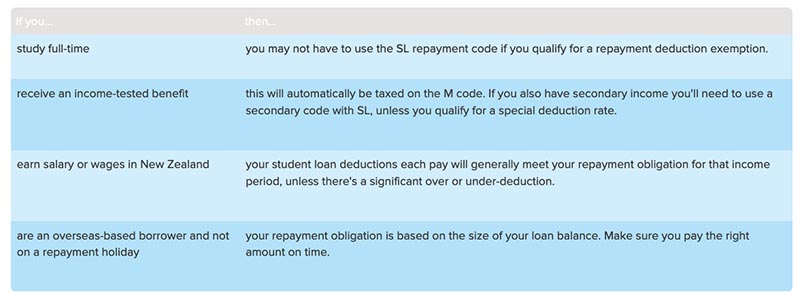
You need to make other payments towards your loan if your income isn’t from salary or wages. You’ll need to work out your repayments if you have adjusted net income requiring IR3 income tax return or a personal tax summary.

​If you receive Working for Families Tax Credits

To reduce your chances of having a bill to pay next year make sure you only receive the tax credits you’re entitled to. If your income is uncertain, consider receiving your entitlement as one lump sum at the end of the year instead of weekly or fortnightly.

If you have income from multiple sources or have investments income its best to seek professional advice.

Written by Elite Accounting · Categorized: Overdue Tax

Oct 12 2022

ACC is something which is at the back of everyone’s minds that is until we get injured. Everyone (or almost everyone) know what ACC is, its insurance that covers you for accidents.

However, like any insurance ACC has different policies which provide different levels of cover. Below we explore how ACC works and what cover is right for you.

For employers

If you are an employer you automatically get covered under the workplace cover, this is the standard cover for employers.

The standard workplace cover covers you for:

  • up to 80% of your employee’s salary while they can’t work
  • subsidised medical care for your staff’s work-related injuries
  • injury prevention schemes

What you pay for this workplace cover is dependant on the amount of wages you pay. Inland Revenue provides ACC with a summary of your payroll information and ACC uses this to calculate your levy and invoice you. The levy also depends on your industry classification so make sure this is correct with the IRD and ACC as more risky industries tend to have higher ACC levy rates.

Self-Employed (Sole-Traders, Contractors)

ACC CoverPlus is the default option for self-employed or a contractor. You are eligible for this cover as soon as you start your business and you are automatically covered.

ACC CoverPlus covers you for:

  • up to 80% of your taxable income based on the most recently completed financial year.
  • pays towards the cost of your treatment and rehabilitation.
  • Compensation based on actual loss of earnings

Note: ACC CoverPlus does not pay you for the first week after your injury.

ACC CoverPlus Extra is available for Self-Employed and non-PAYE shareholder employees. You have to apply for this cover it is subject to underwriting approval.

ACC CoverPlus Extra covers you for:

  • 100% of the agreed amount

Both CoverPlus and CoverPlus Extra cover you for:

  • Fully paid emergency care and ambulance service
  • Non-urgent surgery
  • Payment towards medical fees including GP and physiotherapy
  • Support services such as home help and childcare
  • Support services to help your client return to work
  • Lump-sum payments for permanent impairment
  • Fatal injuries – cover for dependants and other death benefits

When does ACC invoice you?

  • Employers and shareholder employees – every year based on your liable payroll filed with Inland Revenue. This invoice includes both your final levy and a provisional levy
  • Self-employed and Contractors – this is usually after you file your income tax return
  • New to Business – your first invoice will be triggered after you file your first tax return. This is usually in the second year of business.

Written by Elite Accounting · Categorized: Employing Staff

Oct 12 2022

Once you start employing staff it is important to know your responsibilities as an employer. Below is a quick overview of what you need to do.

The difference between an employee and a contractor?

An employee is a person employed to do any work for hire or reward under an employment agreement. The hire or reward is almost always a wage or salary. Employees have all minimum employment rights under employment laws.

Self-employed people are sometimes referred to as contractors, or independent contractors; these terms mean the same thing. A contractor is engaged by a principal to perform services under an independent contractor agreement.

Contractors are self-employed and earn income by invoicing the principal for their services. A contractor pays their own tax and ACC levies.

Registering as an employer

You can use your own IRD number if you are a sole trader or your business IRD number is you are a company to register as an employer.

Fill the Employer registration form IR334, you can do this either online through the IRD website or you can print, sign and post the completed form to your nearest Inland Revenue office.

Your responsibilities as an employer

When you employ staff, you are responsible for deducting the correct amount of tax and other contributions as per below from their wages and paying this to the IRD via the PAYE system.

  • PAYE
  • KiwiSaver contributions, unless they opt out of kiwisaver
  • child support payments if any
  • student loan payments if required

If any of your staff are members of KiwiSaver then you must pay your employers’ contribution to their fund. This is a minimum of 3% of their annual pay.

You also need to account for and pay Pay fringe benefit tax, if you supply fringe benefits, eg company cars or parking spaces, to your employees.

PAYE/PAYEDAY Filing

Depending on how often you pay your employees you will need to file PAYE returns and pay this to the IRD. You can read more about PAYDAY filing here.

Records you need to keep

You need to keep complete records for all employees, these include:

  • Employment and contractor agreements
  • Making sure all new employees fill in a Tax Code Declaration (IR330)
  • All contractors fill in a Tax rate notification for contractors (IR330C) – if they don’t you will need to deduct tax from the payments made to them at the no-notification rate.
  • Records of returns filed to the IRD. Employer deductions (IR345) and Employer monthly schedule (IR348)
  • wage information (includes hours/days worked)
  • copies of certificate of exemptions
  • copies of special tax codes
  • copies of special tax rate certificates.

All your pay records must be held in New Zealand for at least seven years.

Written by Elite Accounting · Categorized: Employing Staff

Oct 12 2022

Understanding the difference between an employee and a contractor can seem a bit confusing and sometimes not essential. However, it is very important to correctly differential the two as it will affect the rights and obligations of both parties.

Who is an employee?

An employee is anyone employed to work under an employment agreement and works in return for a wage or salary. An employee is covered by employment legislation such as the Employment Relations Act 2000, Minimum Wage Act 1983 and the Holidays Act 2003.

An employee is entitled to minimum breaks during their shift, sick leave, annual leave and other minimum employment rights under employment legislation. Employees also have extra rights, like the right to take a personal grievance.

An employer must keep records for all its employees such as employment agreement, hours worked, leave accrued etc. The employer is also responsible for making deductions such as PAYE, Kiwisaver, Child Support Payments etc and paying this to the IRD.

Who is a contractor?

A contractor is a person who works for someone under a contract for service. Contractors are normally self-employed and invoice their clients for their services. They are not covered by employment legislation hence not entitled for minimum employment rights.

Contractors are also responsible for their own taxes and ACC levies. However, the might have schedular deductions depending on their contracts.

Importance of correctly classifying as employee or contractor

Incorrectly classifying an employee as a contractor can lead to consequences such as the agreement being declared a sham by the employment relations authority and the employer liable for penalties plus, unpaid PAYE tax, minimum wages and leave entitlements.

The courts have developed some legal tests to determine the difference between an employee and a contractor, there tests are:

  • Intention test
  • Control vs independence test
  • Integration test
  • Fundamental/economic reality test
Intention Test

What was the intention of the parties when entering into the agreement?

This will be detailed into the written agreement the parties have.

Control vs independence test

What degree of control does the employer have over the person (the control test)?

The greater the control excised over the worker the more likely they are an employee. A contractor has more flexibility to choose the hours the work, who they work for, the tools to use etc.

The degree of independence will be looked at when deciding if a person is an employee or a contractor.

Integration Test

Is the work performed by the person fundamental to the organisation? Is the type of work performed usually performed by an employee or a contractor?

If the work is continuous, fundamental to the organisation and normally done by employees, it’s more likely the person performing it is an employee.

However if it’s a one off task/project, supplementary part of the business then it could be done by a contractor.

Fundamental/Economic reality test

A contractor usually runs their own business and charges fees (invoices) for its services. An employee works for wages or salary.

A contractor can be paid whatever rate is agreed to. An employee must receive at least the minimum wage for all hours worked.

A contractor can provide services to multiple organisations, where as an employee normally works one full time job.

Note: The above test work together to determine if a person is an employee or a contractor.

Written by Elite Accounting · Categorized: Businesses & Contractors

Oct 12 2022

Independent contractors are self-employed people who control what work they do and how it is done. Since they are not employees no tax or PAYE is deducted, however they may be subject to schedular payments.

It is also important to note that you can be self-employed in one line of work and still work in another job as an employee. For most people they might have a full-time job as an employee and have a part time (side-job) work where they are self-employed.

Self-Employed/Independent Contractors & Locums are responsible for meeting their own tax obligations.

GST Registration

If as a Self-Employed/Independent Contractors or Locum you are earning more than $60,000 per year you are required to register for GST.

In some situations, even if you are earning less than $60,000 you might be required to register for GST, for example in cases where you are paid GST under a contract.

Income Tax Returns

You have to file IR3 income tax returns at the end of the financial year. It is advisable to take professional assistance when doing this.

Some of the problems we see when you file your own tax returns are:

  • Not claiming all expenses
  • Not declaring all income or declaring income in incorrect periods
  • Claiming private expenditure, note you can still claim home office expenses

If you are unsure what to do, contact us today for a free no obligation conversation.

Written by Elite Accounting · Categorized: Businesses & Contractors

Oct 12 2022

What business records you need to keep and for how long

Keeping proper records is important for businesses of any size. It will not only help you complete your year end tax returns but also ensure you have proof of income and expenses in case you get audited by the Inland Revenue Department.

Outlined below are some of the business records you should keep. Rule of thumb is to keep all records for 7 years as required by law. The best way to keep records is to store them online and have backups. With emergence of cloud storage, it’s easier and safer to store all your business records online using services such as dropbox.

Wages & Salaries
  • Signed Employee/Contractor Agreements
  • Tax Code declaration and Kiwi Saver Forms
Physical book or online records with details each payday:
  • Total gross earnings, including taxable allowances
  • Amount of earnings not liable for ACC earner levy
  • The amount of PAYE deducted (taking into account any tax credits for payroll giving donations)
  • Any payroll giving donations and tax credits for them
  • Child support deductions if any
  • Student loan deductions
  • KiwiSaver employee deductions
  • KiwiSaver employer contributions (gross)
  • KiwiSaver employer contributions
  • Superannuation contributions
  • ESCT (employer superannuation contribution tax)
  • Taxable value of any employee share scheme (ESS) benefit
  • Total tax, plus student loan and child support, deducted from the ESS benefit (if any)
  • Value of tax-free reimbursing allowances
  • Personal service rehabilitation payment
Income & Claiming Expenses

Tax Invoices

Keep records of all tax invoices issued. Make sure your tax invoices are valid.

For a tax invoice to be valid it must have:

  • the words “tax invoice” in a prominent place
  • the name and registration number of the supplier
  • the name and address of the recipient
  • the date the tax invoice is being issued
  • a description of the good and services supplied
  • the quantity or volume of the goods and services supplied and either:
  • the total amount of tax charged, the consideration excluding tax and the consideration inclusive of tax, or
  • the consideration for the supply and a statement that includes the tax charge.

Record of expenses

In order to claim for expenses against your income you must keep proper records of all expenses.

The records of your expenses should include:

  • invoices for purchases of more than $50, which you must receive when you buy goods or services on credit for the business.
  • evidence of payment (eg, invoice, cash sale docket, till receipt) for purchases of $50
  • evidence of credit card purchases, including credit card vouchers, payment receipts and monthly statements. Also keep the invoice issued at the time of purchase.

Cashbooks

If you use cashbooks to record your sales and expenses these much be complete and accurate.

Use a cashbook to record all money that your business pays and receives. Include all transactions made by any means, including cheque, direct credit, internet and telephone banking, and automatic teller machines.

At the end of each month, reconcile the cashbook with your bank statement by balancing the payments and receipts in your cashbook with your bank balance.

Online or computer-based accounting system

It is easy and efficient nowadays for small business to keep records using desktop/cloud-based accounting systems.

If you are using such a system, your records must:

  • be sufficient for legal purposes
  • be in English unless the IRD has approved another language
  • can be kept in any form, as long as they contain the necessary information

Banking records

With online banking it has become much easier to keep your banking records.

Normally banks keep your records even after your bank accounts have been closed, however you are still required to keep all your bank statements, cheque & deposit books.

Petty Cash

Petty cash is a small amount of money kept on hand to make day-to-day incidental purchases for items that are too small to pay by cheque or eftpos. Record small cash expenses and attach the receipts to a blank page in your petty cash book and balance it at least monthly.

Vehicle Logbook

If you use your own vehicle in the business, you can claim the running costs. If you use it to travel from home to work, or any personal travel, you’ll need to separate business and private use. To do this, keep a logbook of business and private use of motor vehicles so you only claim the business portion of the vehicle expenses. You must keep a logbook for at least three months, every three years, to work out the business share of the running costs.

You don’t have to keep a logbook if you use the vehicle only for business—you can claim the full running costs without making any adjustments.

When a company owns a vehicle, it can claim the full running costs without making any adjustments. However, the company must pay fringe benefit tax if the vehicle is available for employees’ or shareholder-employees’ private use. The company will also have to calculate GST on the fringe benefit.

* By no means is the above a comprehensive list of all records required to be kept by a business, this will differ from business to business. Contact us if you need advice on your record keeping.

Written by Elite Accounting · Categorized: Businesses & Contractors

Oct 12 2022

Congratulations, as if you are reading this you either have made the brave move to be your own boss or are seriously considering it.

As far as business structures go small companies in New Zealand are very common. There are many advantages to operating under a company name which easily out-weight the costs.

Advantages of operating our business under a company name:

Limited Liability

As the name says a company’s liability is limited to assets owned by the company. Unless the shareholders provide personal guarantees or there is illegal activity, creditors cannot make a claim on the personal assets of shareholders.

Obtaining Finance

Creditors and finance providers may view a company more favorably than a sole trader in terms of offering finance. Sole traders face more difficulty getting loans because their personal credit history and personal finances are considered and they may be perceived to be more risky than companies.

Lifespan

A company does not close down if its shareholders die or resign unlike sole traders. The perpetual existence of companies allows current shareholders to transfer or sell their shares to new shareholders, friends or family.

Taxes

Companies in most parts of the world have a lower tax rate than individuals. This is to encourage business and to acknowledge risks taken by a business vs employees. New Zealand has a company tax rate of 28% whereas the highest individual tax rates is 33%.

Company formation

Now that you have decided on forming a company, how do you actually do it?

Forming a company in New Zealand is relatively easy. All you need is a real me ID. You can get this here https://www.realme.govt.nz/

Once you have a real me ID, you can create a profile on the companies office website: https://companies-register.companiesoffice.govt.nz/

Once done follow the steps to register a company. First you will need to reserve a company name. Choose this carefully and make sure it does not match or is similar to another company name, as it may be rejected and you will have to pay another fee to reserve another name.

Once your company name has been approved you can use this to form the company. You will need to enter details such as number of shares, share allocation, details of shareholders and company directors. You will also have to decide if you want to register for GST.

Once the above is done you will get directors and shareholders consent forms, you have to fill/sign these and upload to the company’s office website.

Upon approve of these your company is formed and you will get a confirmation email with the certificate of incorporation and company extract.

Maintaining a company

You have to file an annual return to update the publicly available information about your company. It this is not filed on time the companies’ registrar will remove the company form the register.

Note: An annual return is not a tax return or financial statement — it’s a yearly update of publicly available information about your company on the Companies Register. To remain on the register, you must confirm or update particular information when you file your annual return.

Companies Act 1993

Companies in New Zealand are legislated by the Companies Act 1993, this act states the requirements of companies such as company constitution, issue of shares and annual meetings.

Unless you are using a professional it is a good idea to read this act when forming or operating a company.

Companies Act 1993: http://www.legislation.govt.nz/act/public/1993/0105/200.0/DLM319570.html

Summary

While it may seem like a daunting task to form a company it might be better for your business in the long term.

Take professional advice if you are not sure how to best structure your business. A good structure can save you thousands in the future.

Written by Elite Accounting · Categorized: Businesses & Contractors

Oct 12 2022

Looking from a layman’s perspective all outgoings for a business are expenses. Whether it be buying a business vehicle or paying a supplier. At the end of the day its money going out of the business and should be deductible in the tax returns.

However like everything else in tax it is not so simple. There are two types of expenditure Revenue and Capital. Revenue expenditure is your everyday business expenses such as paying suppliers, entertainment, office expenses, paying employees etc. These expenses are generally deductible in the same income year they are incurred in.

Capital Expenditure is expenses incurred to buy or upgrade a fixed asset. Such as buying a business vehicle or buying new machinery. These expenses are not fully deductible in the same income year. In case of fixed assets these are depreciated according to their estimated useful life.

Revenue and capital expenditure can also differ from business to business. For example buying a company car will be capital expenditure for a cleaning business however it will be revenue expenditure for a car dealer.

Still confused about what’s deductible for your business, contact us for answers to your specific questions.

Written by Elite Accounting · Categorized: Businesses & Contractors

Oct 12 2022

First of all what are expenses?

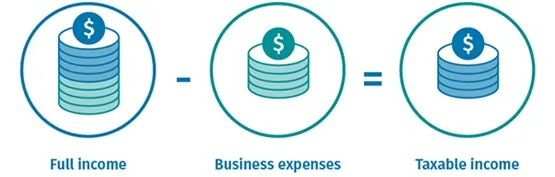
Expenses are costs which you incur in the day to day running of the business. You can claim most of these expenses usually in the tax year they are incurred. The more expense you claim the low your profit will be and the lower tax you have to pay.

So what expenses can I claim?

You will mostly be claiming revenue expenses in full in the year you incur them and you will depreciate capital expenses (buying assets) over time.

Common business expenses you can claim are:
  • vehicle expenses, transport costs and travel for business purposes (for vehicles used for both personal and business purpose apportionment is required, you will need to keep a log book to determine this)
  • rent paid on business premises
  • depreciation on items like computers and office furniture
  • interest on borrowing money for the business
  • some insurance premiums
  • work-related journals and magazines
  • membership of professional associations
  • work-related mobile phones and phone bills
  • stationery
  • work uniforms
  • tax agent’s fees.
What about Entertainment expenses?

Almost every business will have some entertainment expenses such as meals while travelling, Corporate Boxes or staff Christmas parties. Business entertainment expenses are usually deductible, however for some are only 50% deductible while others are 100% deductible.

Expenses which have a private element are only 50% deductible. Some examples are:

  • Corporate boxes
  • Holiday accommodation (can be 100% depending on usage)
  • Recreational Boats
  • Food and Drink at business premises
  • Social events such as Christmas Parties
  • Offsite food and drink
  • Gifts of food and drink

Examples of expenses which are 100% deductible

  • Food and drink while travelling on business
  • Food and drink provided at a conference
  • Light meals provided in a dining room for senior managers
  • Promoting your business, products or services
  • Cost of Freebies promoting your business
  • Entertainment supplied for charity
  • Offshore entertainment

Getting a tax agent or accountant to complete your return may end up saving you money. They know all the things you can claim for.

Contact us if you want to discuss specific items which you can claim for in your tax returns.

Written by Elite Accounting · Categorized: Businesses & Contractors

Oct 12 2022

Do you do have boarders or income from short-term accommodation such as renting out a room, or your home for a short term. Your tax obligations can be different depending on the use of the property.

Boarders (Renting out a room)

If you have boarders or students living with you, you don’t have to declare this income unless your income from this source is higher than the standard cost per week or if you have more than 4 boarders.

The standard weekly cost is $266 for each boarder up to 2 boarders and then $218 for each boarder for the 3rd and 4th boarder.

Holiday Home

Different rules apply for a mixed used holiday home. That is if you have a holiday home that you use yourself, you rent it out and it’s unoccupied for 62 days or more.

If the above applies and you earn less than $4,000 a year from renting out the holiday home, you don’t need to include this income in your tax return. Note: you also cannot claim any expenses as well.

Similar rules also apply to mixed use boat and aircraft.

Airbnb, Bookabach or other Accommodation sites

If you advertise on websites such as Airbnb, Bookabach etc you need to include this income in your tax return. Even if you received income from this as a one-off or irregular rental, you still are required to include this.

Not sure?

Not sure if you are required to include income from your property in your tax returns. Give us a call or flick up an email for a no obligation free consultation.

Written by Elite Accounting · Categorized: Property Investment

Oct 12 2022

IRD has released an issues paper on the proposal to change the rules of how losses from rental properties can be applied against other income. Under the proposed new rules these losses will be ring fenced meaning property investors will not be able to use these losses against their other income. The change according to the government is an effort to level the playing field between speculators, investors and home buyers.

At present if you own a rental property which is held under your name (sole trader), in a partnership or LTC and you make a loss, then you can offset that loss against your other income such as tax paid on wages. You will therefore get a tax refund.

According to the proposal the ring-fencing will be applied on portfolio basis meaning investors would be able to offset losses from one rental property against rental income from other properties – calculating their overall profit or loss across their portfolio.

The losses will be carried forward and offset against future income from the portfolio or on taxable income from sale of residential land.

What should investors do?
  • There is no need to panic as this isn’t law yet. It is proposed that the rules will apply from the start of the 2019–20 income year. The rules could either apply in full from the outset, or they could be phased in over two or three years.
  • Investors who are negatively geared need to look at paying of some of their mortgages and making their investments cash flow positive
  • If you are dependent on tax refunds to make mortgage payment you may have to reconsider your investment mix. One of the solutions can be to buy cash flow positive properties to offset the losses and get a neutral portfolio.
  • Consider your overall budget and see if you can do without the tax refund
  • What impact with this have to your overall portfolio and take action based on this.

Again this is only a proposal; you can view the full document here.

Written by Elite Accounting · Categorized: Property Investment

Oct 12 2022

As the government’s proposal to ban letting fees passes through the legal hops experts warn that it will only drive up costs for the tenants. This will be true in some cases as landlords will want to keep their returns at the same level. However, its impractical to pass on all cost increases to tenants.

Recent changes have made it compulsory for houses to be insulated and have smoke alarms. While these changes are good they still put pressure on the already decreasing returns from rental properties.

So, are rental properties the go to investment it used to be? The answer is not so simple and varies according to the investors risk/return appetite.

Contact our professional advisors today if you are considering investing in a rental property and we can advise you if it suits you.

Written by Elite Accounting · Categorized: Property Investment

Oct 12 2022

Rental income

All rental income received is normally taxable with some exceptions to income from boarders or flatmates (you can read more about this in our boarders/flatmates section)

Rental Income in advance

All rental income received in an income year is taxable in that income year. For example if your tenant has paid you rent in advance for the next two weeks on 31st March 2017, the advance payment will be taxable in the income year 1 April 2016 to 31 March 2017.

Tenancy bond

Amounts you receive for tenancy bond and pass on to the Ministry of Business, Innovation and Employment are not income. Amounts you receive from the Ministry of Business, Innovation and Employment for payment of damages, rent arrears etc, should be included as income.

Expenses you can deduct from your rental income

In a nutshell you can deduct all expenses incurred in earning the rental income which are not capital in nature. Owning a rental property you are likely to have advertising, real estate management and repair and maintenance costs, these are all deductible from your rental income.

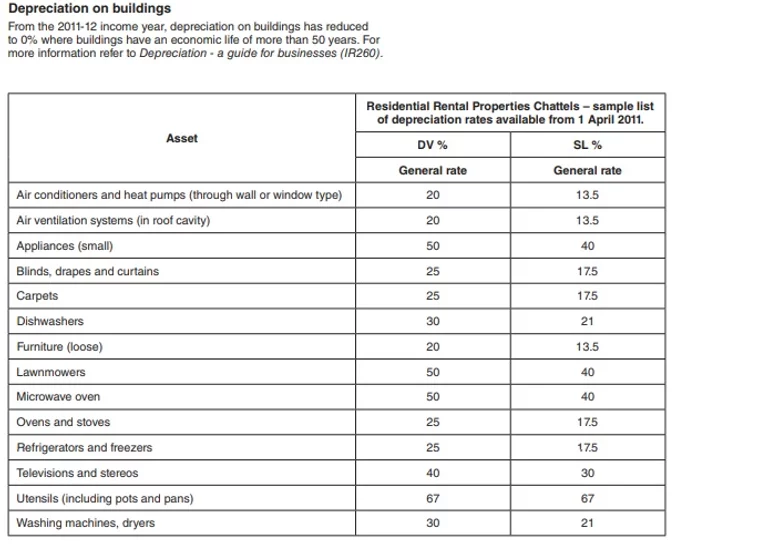
Other expenses which you can claim include Rates and insurance, interest on home loan, Motor vehicle expenses (claim percentage depending on usage), Travel expenses, Accounting fees and depreciation.

If you’re unsure whether you’re in the business of renting property, or if you can claim an expense, contact us.

Written by Elite Accounting · Categorized: Property Investment

Oct 12 2022

Written by Elite Accounting · Categorized: Property Investment

Oct 12 2022

​Crypto currencies such as Bitcoin and Ethereum have been really popular investment options in recent times. Their value has surged which has lead to exponential gains for investors and it might be easily forgotten that while even though un-regulated Crypto currencies are still taxable.

IRD has recently released guidance around taxing crypto currencies. According to the IRD Crypto currencies are treated like property for tax purposes. Although trading in crypto currencies may happen in a digital realm but tax obligations still apply in New Zealand.

Just like with property when you acquire crypto currency for the purpose of selling or exchanging it, the proceeds you make from selling it are taxable. Tax is also applied when one crypto currency is swapped for another. You don’t need to cash out to dollars to create a tax obligation. Likewise, if you receive a crypto currency as payment for goods or services, this is considered business income and is taxable. Tax rules for foreign exchange don’t apply when it comes to crypto currencies.

Dealing with Crypto Currencies and still not sure of your obligations? Contact us for more guidance.

Written by Elite Accounting · Categorized: Other Topics & Links

Oct 11 2022

What to do if you have overdue tax returns

​

Running a business can be hard and filing of tax returns can be the last thing on your mind. We have seen many cases where business owners are at-least 2 years behind in filing their tax returns. Problems such as cash-flow issues, day to day running of the business and the uncertainly of the final tax bill prevents the timely filing of tax returns.

But does late filing of tax returns help?

The simple answer is NO. It only aggravates the problem. Not filing tax returns on time does not mean that you do not have to pay any tax. It means when the returns are filed you will not only have a tax bill but that bill will be inflated by late payment penalties and interest charges.

But what if you filed the tax returns and did not have the fund to pay it all?

Not a problem, we help our clients enter into arrangements with the IRD to pay it off over time. By doing this you will avoid late payment penalties while remaining compliant with your tax obligations.

All business face problems and the IRD are aware of this. There are multiple ways we help our clients to keep on top of their taxes. Running away from filing tax returns or delaying payment as much as possible does not work and will land you in more trouble.

As the saying goes nothing is certain but death and taxes. We cannot help you with death however contact us today if you want to keep on top of your taxes.

Written by Elite Accounting · Categorized: Overdue Tax

Oct 11 2022

Land bought with the intention or purpose of resale is subject to tax. The taxpayer is required to return any gains as income. However the problem was enforcing this as the “intention test” was subjective.

In light of the, shall we call it the “housing crisis” the government introduced a new land sale rule to supplement the “intention test”.

From 1st October 2015 the bright line test applies to the disposal of residential land. Under the bright line test if you buy a residential property on or after 1 October 2015, and you sell this property within two years, you will be taxed on any gains that you made, regardless of your intention when you bought the property, unless you can prove that you fall within one of the exceptions to this rule. The date a person acquires their “first interest” is the same date as when they acquire land for the purposes of section CB 15B in the Income Tax Act 2007. (Sounds a little technical, so leave this to us)

There are 4 main exceptions to the bright line test:

  • The property was your main home
  • You inherited the property
  • The property was transferred to you as part of a relationship property agreement
  • The property was transferred under a will

While the above exceptions might seem straightforward they are not, there specific rules that apply to each exception. For example you cannot have more than one main home, if a person has two homes in which they reside in, the property that is their main home is determined according to which property the person has the greatest connection with. The “greatest connection” test operates only as a tie-breaker when a person has more than one home.

Selling residential property which you have owned for less than two years contact us and help you determine if you not to returns the gains as income.

* The government is looking to extend the bright line test by 5 years. Contact us to find out how this might affect you.

Written by Elite Accounting · Categorized: Property Investment

Oct 11 2022

The IRD has introduced a new method for calculating and paying provisional tax. Accounting Income Method uses new functionality included in approved accounting software to work out payments.

So why a new method and why AIM. What you need to know.

Who can use AIM?

From April 2018 small businesses that have turnover of less than $5 million a year can work out their provisional tax using this method. AIM is basically a pay-as-you-go choice for businesses with turnover under $5 million a year, and will suit businesses wanting to keep up-to-date and on top of their tax obligations. Small businesses choosing AIM will pay provisional tax in line with their cashflow.

However note that business which have investments in foreign investment funds (FIF) or controlled foreign companies (CFC) for the income year or are in a transitional year (a year in which you’ve changed your balance date) cannot use AIM. You cannot use AIM if you are a partnership, trustees and beneficiaries of a trust, Māori authority, superannuation fund or a portfolio investment entity (PIE).

​

What software do I have to implement in-order to use AIM?

Currently only the below are approved accounting software available for business who want to use this method.

  • MYOB (MYOB AccountRight Live & MYOB Essentials Accounting)
  • Reckon
  • APS software
  • Xero (Xero Tax Practice Manager)
Why has the IRD introduced a new method?

Compliance with provisional tax has always been a major issue for the IRD. Small and Medium business either do not completely understand how provisional tax works or they have cashflow issues in meeting their obligations. The IRD is trying to increase compliance by addressing these issues with AIM.

Benefits of using AIM

Use of money interest – A business using AIM to calculate and pay provisional tax will not be charged use of money interest unless the business has failed to pay the instalments as calculated under AIM.

No big tax bill at the end of the tax year – It is expected that businesses who use AIM will either no longer have terminal tax liabilities (on the basis that their tax payments will be made in near real-time, and based on actual results), or there will be a small difference between their provisional tax payments and their final liability.

Great for start-ups – AIM will be great for start-ups because they only pay tax on results they have achieved. AIM should also work well for businesses that are seasonal or have fluctuating income because the payment of taxes adjusts with how much revenue you earn.

Responsive to change – AIM will also be responsive to changing business conditions. If economic conditions tighten and a business’ tax liability drops, Inland Revenue will refund overpayments, in much the same way that GST refunds are handled.

Drawbacks of using AIM

Compliance cost – Despite the IRD saying that AIM will not increase compliance cost, we disagree. Small Business using alternate accounting software or no software at all will have to switch to one of the approved accounting software programs.

Since statements of activity will be required to be filed throughout the year there will be additional accounting costs involved.

Late filing and payment penalties still apply – If a statement of activity is filed but payment isn’t made, penalties and interest will apply to the underpayment. These will continue to apply until you make payment.

Not filing statement of activity can switch you over to estimation option by default – You can’t miss filing more than two statements of activity. If you do, you will no longer be able to use AIM and you’ll be treated as using the estimation option. The estimation option will apply as if you have been in it for the whole year. This will result in exposure to use-of-money interest.

Overall

AIM provides a good alternative to provisional tax calculations and payment however it will not be suitable for all businesses. It might be very beneficial for some businesses whereas detrimental for others. Talk to us if you are thinking of using AIM for your business.

Written by Elite Accounting · Categorized: Income/Provisional Tax, PAYE & GST

Oct 11 2022

What is payday filing?

Payday filing is an online option for submitting your employment information to the IRD after every payday. You’ll need to submit an employment information schedule after every payday, instead of an IR348 (Employer monthly schedule).

Do you have to use payday filing?

Payday filing is optional from 1 April 2018 to 31 March 2019 however it’s compulsory from 1 April 2019. Therefore Employers and payroll intermediaries must payday file from 1 April 2019.

You must also file online if you make PAYE/ESCT deductions of $50,000 a year or more. If your total PAYE/ESCT is less than $50,000 for the previous year ended 31 March you can either file paper returns or file online.

How does it work?

IRD has been doing a lot of work behind the scenes as part of its making tax simpler initiative. It has replaced its old system with a new and now has in place software which can connect to online accounting and payroll systems. This means that PAYE filing, always a manual task up until now, can finally be automated.

Payday filing is an online option for submitting your employment information to the IRD directly from your accounting software. However you can also file upload in myIR or manually fill the on screen form (not recommended as errors are likely).

You’ll need to submit an employment information schedule after every payday, instead of an IR348

IR345 form and payment. The due dates for paying and submitting the IR345 stay the same. If you submit employment information directly from your payroll software, you still need to file an IR345 form.

Switching to Payday filing

Business will eventually have to switch to payday filing. The IRD has allowed a year for business to switch and make sure their systems are working perfectly and producing the correct schedules. Our advice is not to wait till 1 April 2019 when it becomes compulsory to use payday filing, rather start now for a smooth transition. Contact us if you have any questions around payday filing and how start using it.

Written by Elite Accounting · Categorized: Income/Provisional Tax, PAYE & GST

Contact Us

We would love to hear from you. Email, phone or connect with us via social media.

09 393 7025

0210 886 9295

info@eliteaccounting.co.nz

69 Ben Lomond Crescent, Pakuranga Heights,
Auckland 2010


Xero Gold Partner

Footer

2026 ©
Elite Accounting Limited | site by: barefoot web design