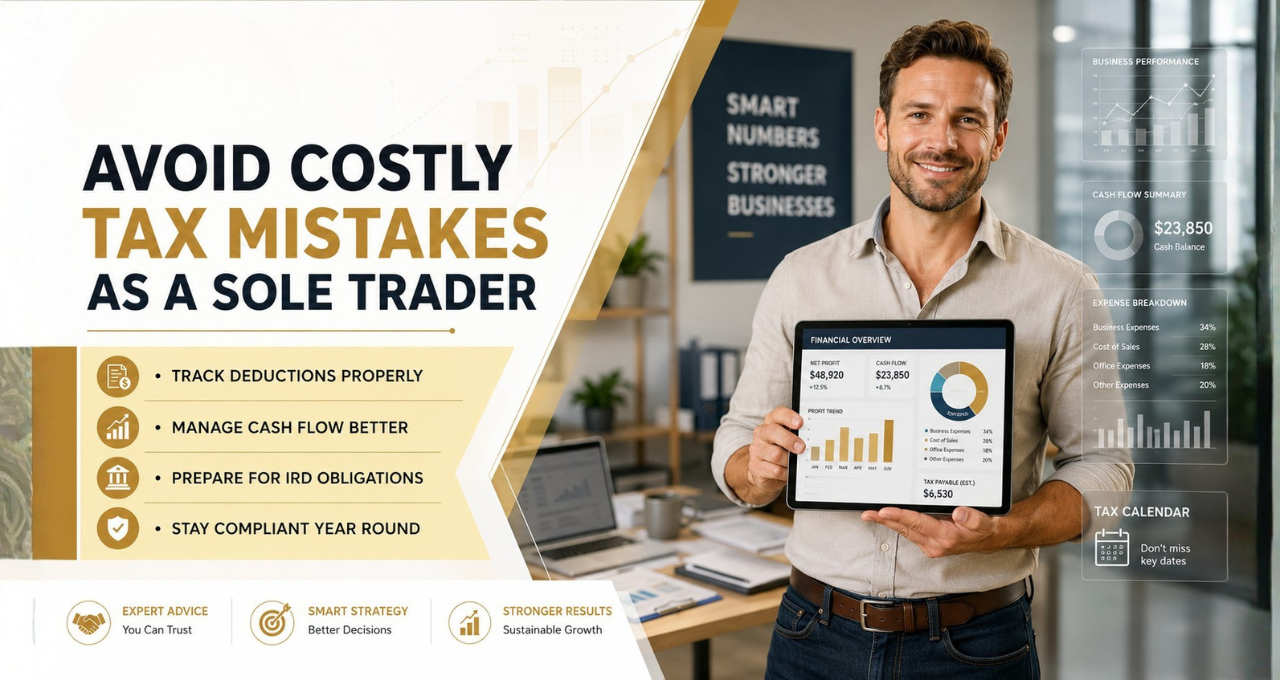
The strange part about tax? Most problems start when the business is going well.
The first few months usually feel manageable. You invoice clients. Money comes in. Expenses are small enough to track mentally. Tax feels far away, so you focus on growth instead.
Then the business starts picking up. More invoices. More subscriptions. Bigger expenses. Faster months. Suddenly, the system that worked when things were smaller no longer keeps up properly.
That’s when sole traders often realise something uncomfortable.
The business is growing… but the financial structure behind it hasn’t grown with it.
So tax becomes reactive. Bookkeeping becomes inconsistent. And every IRD deadline starts feeling closer than expected.
This is exactly why experienced business owners stop treating tax as a once-a-year event. They build habits around it early, while the business is still manageable.
And honestly? That shift changes everything.
Good tax management by a seasoned small business accountant is not really about forms or calculations. It’s about staying financially aware before problems start building quietly in the background.
Here’s What Strong Sole Traders Usually Do Differently
Not perfectly. Just consistently.
They don’t wait until year-end to understand their numbers. They create small financial habits that reduce stress, improve visibility, and make tax season far less chaotic.
These are the habits that matter most.
1. Don’t Wait Until GST Registration Becomes Urgent
A lot of sole traders think about GST too late.
Business grows. Revenue increases. Then, suddenly, the GST threshold is approaching faster than expected, and the systems behind the business are not fully prepared for it.
That creates pressure around:
- Pricing
- Invoicing
- Record keeping
- Cash flow planning
In New Zealand, GST registration becomes compulsory once turnover exceeds $60,000 within a 12-month period. Some businesses also choose to register voluntarily earlier so they can claim GST back on business-related expenses.
The important part is not just registering. It’s preparing early enough that the transition feels controlled instead of rushed.
2. Separate Your Business and Personal Spending Immediately
This sounds simple. But it changes everything.
Many sole traders start casually. One bank account handles both business and personal spending because it feels easier early on.
Then transactions multiply.
Suddenly:
- Fuel expenses mix with personal shopping
- Business subscriptions disappear into personal spending
- Tax deductions become harder to verify
- Bookkeeping takes twice as long
Good financial clarity starts with separation.
A dedicated business account immediately improves:
- expense tracking
- tax accuracy
- reporting visibility
- bookkeeping consistency
Strong small business accounting is rarely about complicated accounting tricks. More often, it’s about making everyday financial information cleaner and easier to understand.
3. Small Expenses Often Become the Biggest Missed Deductions
Most sole traders don’t forget major purchases.
They forget the smaller recurring costs that slowly disappear over time.
Things like:
- software subscriptions
- mobile phone usage
- parking
- internet costs
- business meals
- online tools
- small office purchases
Individually, they seem minor.
Across an entire financial year, they become meaningful deductions.
That’s why organised record keeping matters so much. Because tax is calculated on profit, not total revenue.
A proactive tax advisor near me will usually focus less on “creative deductions” and more on helping sole traders properly track legitimate expenses they already have.
4. If You Work From Home, Don’t Ignore Home Office Claims
A large number of NZ sole traders now operate partially or fully from home.
Yet many still underclaim home office expenses because they assume the process is too complicated.
In reality, IRD allows eligible sole traders to claim a portion of household costs based on the percentage of the home used for business purposes.
This may include:
- internet
- electricity
- rent or mortgage interest
- insurance
The key is maintaining reasonable calculations and supporting records.
Over time, these deductions can make a noticeable difference.
5. Vehicle Expenses Become Risky When Records Are Weak
Vehicle deductions are one of the most common areas where sole traders create problems unintentionally.
Usually, because record-keeping becomes inconsistent.
If you use a personal vehicle for work purposes, maintaining a proper logbook helps establish the percentage of business use. Many sole traders complete a 90-day logbook period to support their claims accurately.
Without proper tracking:
- deductions become harder to justify
- business usage gets estimated poorly
- compliance risks increase during reviews
And honestly, vehicle claims tend to attract more attention when the records look unclear.
6. The Smartest Sole Traders Treat Tax Like a Monthly Expense
This is one of the biggest mindset shifts experienced business owners eventually make.
Instead of viewing tax as a future problem, they build it into their monthly cash flow planning immediately.
Many accountants recommend setting aside roughly 25–30% of income into a separate savings account to help cover:
- income tax
- GST
- ACC obligations
- provisional tax
That simple habit creates breathing room later.
Without it, many growing businesses suddenly feel cash flow pressure even during profitable periods.
A reliable small business accountant often becomes most valuable here, not during filing season, but during planning season.

7. Late Filing Usually Starts Small
Most businesses with overdue tax returns did not begin with a major financial crisis.
Usually, it starts with small delays:
- a busy month
- incomplete bookkeeping
- uncertainty around expenses
- avoidance caused by stress
Then the backlog grows quietly.
The issue is not just penalties. It’s the mental pressure that builds when financial visibility disappears.
Filing on time matters, even when payment arrangements may still be needed later. Early communication and structured planning almost always reduce stress compared to long periods of avoidance.
8. Provisional Tax Catches More Sole Traders Than People Expect
One strong financial year can create a surprise many sole traders are not fully prepared for: provisional tax.
Once residual income tax exceeds the IRD threshold, businesses may need to start paying tax in instalments throughout the year.
The problem is not the tax itself.
The problem is that many sole traders only realise the impact after cash flow has already tightened.
This is where working with a trusted small business accountant auckland businesses rely on, becomes valuable because forecasting obligations early creates far more flexibility later.
9. Software Helps. But It Doesn’t Replace Financial Judgment.
Cloud accounting software is excellent for tracking information.
But software does not:
- explain risk
- forecast tax pressure
- identify inefficient habits
- improve decision-making automatically
That human advisory layer still matters.
Especially when businesses start growing faster, and financial decisions become more important in the long term.
Many sole traders eventually realise that accounting support is not only about filing tax returns. It is about gaining clearer financial visibility throughout the year.
10. The Goal Is Not Just Lower Taxes. It’s Better Financial Stability.
This is the part that many business owners realise later.
Good tax habits do more than improve compliance.
They create:
- calmer decision-making
- better cash flow visibility
- fewer financial surprises
- stronger growth planning
- reduced stress around IRD obligations
And over time, that stability becomes one of the biggest competitive advantages a small business can have.
FAQ
Sole traders pay individual income tax rates. Current NZ tax brackets range from 10.5% for lower income levels up to 39% for higher earnings.
Yes. If GST registered, sole traders can generally claim GST on eligible business-related purchases and expenses.
Yes. ACC invoices are usually based on liable earnings and help cover work-related injury support.
Late filing may result in penalties, interest, and increased IRD attention. Addressing issues early generally reduces complications significantly.
Many sole traders eventually choose professional support because business finances become more complex as revenue grows. A structured accounting system often improves clarity, compliance, and long-term planning.
Conclusion: A More Stable Financial Approach for Sole Traders
With Elite Accounting Limited- Chartered Accountants, sole traders receive structured support designed around long-term clarity, not just annual filing.
That includes:
- Better visibility over business finances
- Practical tax planning guidance
- Consistent bookkeeping support
- Help manage IRD obligations properly
- Financial systems that grow alongside the business
Because the goal is not simply to “get through tax season.”
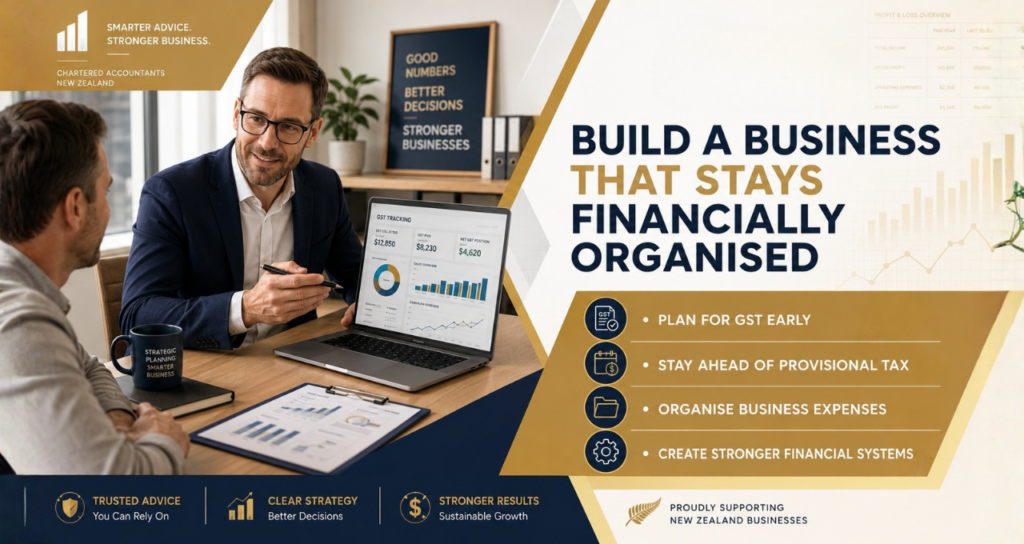
It is to build a business that stays financially organised all year round.