You’ve just closed your shop for the day. Your laptop is open, and the pile of invoices, receipts, and bank statements in front of you feels like a mountain. You sip your coffee and think, “Did I enter that payment? What about payroll? And GST…am I going to get it wrong?”
If this sounds familiar, don’t worry. You’re not alone. Many small business owners in New Zealand juggle daily operations while trying to keep their finances on track. The stress can mount quickly, and suddenly, staying IRD-compliant feels overwhelming.
That’s when the big question arises: “Do I hire a bookkeeper, an accountant, or both?”
The answer isn’t simple, but getting it right can save you time, money, and sleepless nights.
Let’s walk through the differences, explain when each is essential, and show a workflow that keeps your business compliant and confident.
Why Understanding the Difference Matters
Here’s the reality: bookkeeping and accounting are not the same thing. Mix them up, and you risk mistakes that can be expensive.
- Filing GST or PAYE incorrectly
- Missing deductions
- Late submissions and penalties from the IRD
- Cashflow headaches that could have been avoided
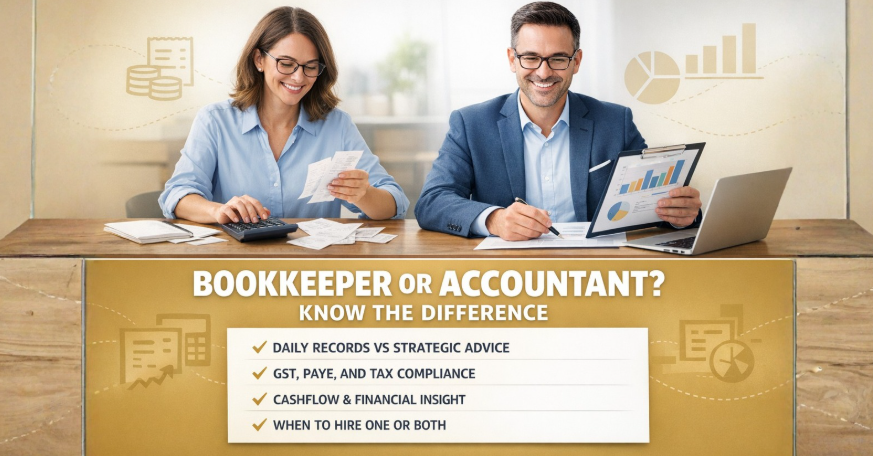
Think of it this way: bookkeeping keeps your finances organised, while accounting helps you make sense of those numbers. Both are important. Both work together, but for different purposes.
Bookkeeper vs Accountant NZ: Roles Explained
Sometimes it helps to see it side by side. Here’s what each role does in a NZ small business:
| Task | Bookkeeper | Accountant |
| Record daily transactions | Yes | |
| Reconcile bank statements | Yes | |
| Track invoices & payments | Yes | |
| Manage GST & payroll | Yes (Only draft) | Yes (Final) |
| Prepare financial statements | Yes (Only draft) | Yes (Final) |
| Tax advice | Yes | |
| Strategic financial planning | Yes | |
| IRD compliance & lodgement | Yes | |
| Business growth advice | Yes |
Bookkeeping in NZ
Bookkeepers are like the front-line soldiers of your finances. They make sure every sale, invoice, and expense is recorded properly.
- Enter sales, invoices, and expenses weekly
- Reconcile bank statements monthly
- Prepare GST drafts
- Track cash flow to prevent surprises
Without accurate bookkeeping, your accountant will struggle to provide advice…and mistakes can slip through unnoticed.
Accounting in NZ
Accountants take the data your bookkeeper prepares and turn it into insight. They check for errors, ensure IRD compliance, and help you make strategic decisions.
- Finalise financial statements for year-end reporting
- Advice on deductions, provisional tax, and PAYE obligations
- Submit accurate returns to the IRD
- Guide your business growth and cash flow strategy
At Elite Accounting Limited- Chartered Accountants, we combine bookkeeping and accounting services so your finances are organised, compliant, and ready for growth.
When Your Business Legally Needs an Accountant
Some NZ businesses must involve an accountant. For example:
- Companies or LTCs needing certified financial statements
- Businesses with employees submitting PAYE and KiwiSaver
- Businesses with turnover requiring provisional tax and GST
- Situations with complex transactions, loans, or audits
Even if you’re a sole trader, there are times when an accountant becomes essential:
- Filing annual tax returns correctly
- Claiming deductions or managing IRD queries
- Planning for business growth, financing, or investment
Decision Matrix: Who Does What?
Here’s a simple guide to help you decide:
| Scenario | Bookkeeper Only | Accountant Only | Both |
| Sole trader, simple income & expenses | Yes | ||
| Sole trader, GST registered & employees | Yes | Yes | |
| Small company, multiple shareholders | Yes | Yes | |
| Growing SME, complex cashflow | Yes | ||
| Preparing for audit or IRD review | Yes | Yes |
This matrix makes it easier to see who you need. Often, the best approach is both. Bookkeepers handle day-to-day records, accountants review, advise, and ensure compliance.
Cost vs Risk: Making the Right Choice
Money matters. Hiring a professional may feel expensive. But consider the cost of mistakes.
- Bookkeeper Only
Pros: Lower cost, keeps records tidy
Cons: Risk of missed deductions, incorrect GST or PAYE, cashflow errors
- Accountant Only
Pros: Ensures compliance, provides strategic advice
Cons: Daily records may get messy, miand nor errors can slip through
- Both Bookkeeper + Accountant
Pros: Smooth workflow, minimal mistakes, full IRD compliance
Cons: Slightly higher cost, but saves stress, penalties, and wasted time
At Elite Accounting Limited- Chartered Accountants, we help small businesses balance cost and risk. You get expert oversight without paying for unnecessary services.
How Bookkeeping Services NZ and Accountants Work Together

Here’s a workflow that actually works:
- Daily/Weekly Bookkeeping: Record transactions, track cash flow, prepare GST drafts
- Monthly Reconciliation: Bookkeeper checks records and flags issues
- Accountant Review: Accountant ensures compliance, reviews GST, and advises on deductions
- Quarterly & Annual Filing: Submit GST, PAYE, provisional tax, and annual returns on time
- Strategic Advice: Accountant recommends tax savings, cashflow improvements, and growth planning
This workflow keeps your finances accurate, stress-free, and IRD-compliant.
Choosing the Right Partner for Your Business
Picking the right financial partner isn’t just about cost. Look for:
- NZ Experience & IRD Knowledge: Understanding GST, PAYE, and compliance rules
- Transparent Pricing: No hidden fees
- Technology Compatibility: Works with Xero, MYOB, or your preferred software
- Communication & Support: Explains numbers in plain English
- Reputation & Referrals: Recommendations from other NZ small businesses
Elite Accounting Limited – Chartered Accountants provides practical, approachable support. We guide businesses through bookkeeping, accounting, and strategic advice so you can focus on what you do best: running your business.
FAQs
- Can I manage bookkeeping myself?
Yes, for very small businesses. But errors can slip through, and accountants may struggle to provide advice. Professional oversight reduces stress and IRD risk.
- Do I need an accountant if I hire a bookkeeper?
Often yes. GST, PAYE, tax returns, and deductions require oversight. Using both reduces errors and saves time.
- What is the difference between a bookkeeper and an accountant?
Bookkeepers handle daily records. Accountants interpret data, advise on tax, and provide strategic guidance.
- How do I choose an accountant in NZ?
Look for NZ experience, IRD knowledge, clear pricing, and strong communication. Ideally, they can work alongside your bookkeeper.
- Are there penalties for mistakes?
Yes. IRD can charge fines or interest. Early bookkeeping and professional accounting prevent errors and reduce stress.
Conclusion:
Here’s the bottom line: knowing whether you need a bookkeeper, an accountant, or both can save you time, money, and stress.
For NZ small business owners, combining bookkeeping with accounting ensures:
- IRD compliance and peace of mind
- Fewer errors and missed deadlines
- Better financial insight for confident decision-making
- More time to focus on growing your business
Elite Accounting Limited – Chartered Accountants helps NZ businesses manage both day-to-day bookkeeping and high-level accounting. We make finance simple, organised, and stress-free.
Speak with our specialist today to discuss your business needs and ensure compliance without the stress.