Keeping your business finances on track shouldn’t feel like a full-time job. I know it’s stressful. Invoices pile up. GST deadlines loom. Receipts vanish. And somewhere in the chaos, your accounts can start to feel… overwhelming.
Don’t worry! You’re not alone! Many Kiwi business owners feel the same. But it doesn’t have to be this way. With the right approach, accounting can be simple, manageable, and even a tool to grow your business.
This guide gives you essential small business accounting tips for 2026. Short, practical, and easy to follow. And yes, Elite Accounting Limited- Chartered Accountants will show you how to stay on top of your finances without losing sleep.
Know Your Business Structure: Sole Trader, LTC, or Company
First things first: your accounting obligations depend on your business type. Pick the right structure, and you avoid headaches.
Sole Trader? Simple, but you’re personally responsible.
- GST? Only if turnover >$60,000.
- PAYE? For any employees.
- Keep it simple: separate personal and business finances.
Look-Through Company (LTC): Profits flow to you personally.
- Accurate records are a must.
- Shareholder info goes to the IRD.
- Tip: transparent reporting avoids surprises at year-end.
Company: A separate legal entity.
- Annual returns and detailed records are compulsory.
- Monthly 2 Monthly or 6 Monthly GST, PAYE, and end-of-year statements.
- Pro tip: robust bookkeeping now saves penalties later.
Remember: knowing your entity type sets the foundation for everything else.
Bookkeeping Made Simple: Your Workflow
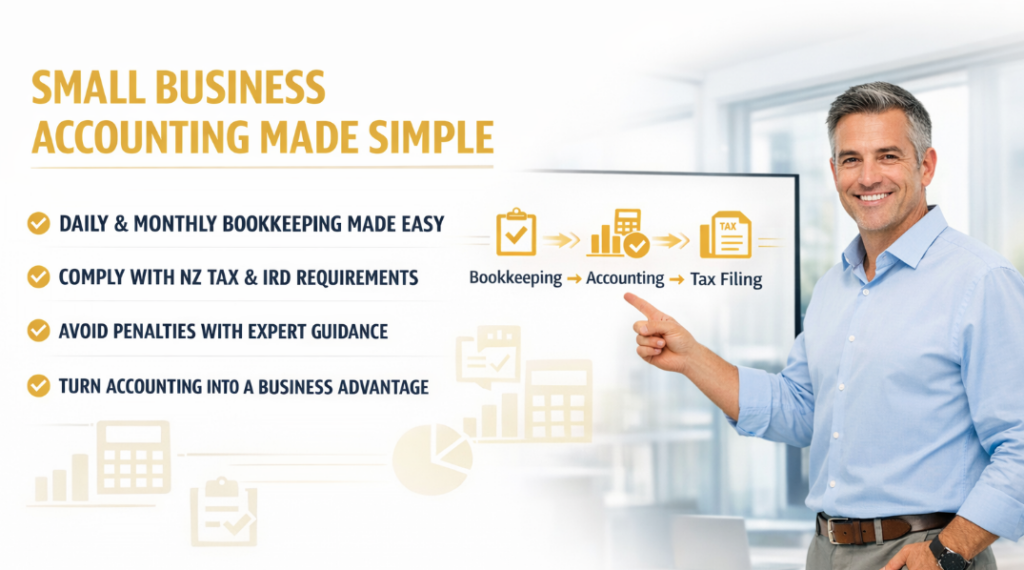
Here’s a workflow that works for NZ small businesses. Short, simple, practical.
- Daily / Weekly Record-Keeping
- Log invoices, receipts, sales, and expenses.
- Use Xero or MYOB to stay organised.
Why? Weekly updates prevent chaos and errors later.
- Monthly Reconciliation
- Match bank statements to your records.
- Spot mistakes before they become problems.
Fun fact: this step alone saves hours at year-end.
- Accountant Review & Advisory
- Share reconciled books with a qualified accountant.
- They’ll advise on deductions, flag compliance issues, and give cashflow tips.
- Quarterly & Annual Filing
- Submit GST, PAYE, and tax returns on time.
- Avoid penalties, interest, and stress.
- Continuous Improvement
- Listen to your accountant’s insights.
- Adjust workflows, optimise cashflow, and plan growth.
Elite Accounting Limited- Chartered Accountants helps small business owners implement this workflow. Stress? Gone. Confidence? High.
IRD Obligations: Don’t Miss These Dates
Compliance can feel like a maze. But it’s manageable. Here’s the short version:
- GST Returns: monthly, two-monthly, or six-monthly.
- PAYE & KiwiSaver: monthly for employees.
- Provisional Tax: if your annual tax exceeds thresholds.
- Annual Tax Returns: everyone, every year.
Tip: Mark these in your calendar. Alerts help. So does an accountant.
Avoid These Common Mistakes
Oops! Even smart business owners slip up. Watch for these:
- Mixing personal and business finances.
- Skipping reconciliations.
- Filing GST or PAYE late.
- Delayed invoicing; hello, cashflow problems.
- Ignoring your accountant’s advice.
Fix these, and your business runs more smoothly. Easy wins.
Pro Tip: Regular check-ins with Elite Accounting Limited- Chartered Accountants prevent these mistakes before they cost you.
Tax-Saving Tips and Checklists
Want to save money? Here’s how:
- Claim all legitimate expenses: home office, travel, and software subscriptions.
- Track expenses in real time.
- Review provisional tax payments to avoid over- or under-paying.
- Keep all receipts and documentation.
- Mid-year review with an accountant? Absolutely. Adjust forecasts early.
Checklist:
- Weekly: Log invoices, expenses, payments.
- Monthly: Reconcile bank vs ledger.
- Quarterly: Submit GST & PAYE.
- Year-End: Prepare tax returns, financial statements, and compliance review.
Elite Accounting Limited- Chartered Accountants can even provide a ready-made checklist for your business.
FAQ: Quick Answers for Small Business Owners
Q1: What are the main accounting obligations for NZ small businesses?
Keep accurate records, file GST if needed, pay PAYE, and submit annual tax returns. Obligations vary by entity: sole trader, LTC, or company.
Q2: How often should I update my bookkeeping?
Weekly is ideal. Monthly minimum. Regular updates reduce errors and cashflow issues.
Q3: Can I handle accounting myself?
Software helps, but a qualified accountant ensures compliance, catches mistakes, and gives tax advice.
Q4: How do I choose the right small business accountant?
Experience, IRD knowledge, transparent pricing, and someone who can guide you through GST, PAYE, and tax filing efficiently.
Q5: Are there penalties for late or inaccurate filings?
Yes. The IRD can charge fines and interest. Early bookkeeping and a trusted accountant prevent these costly mistakes.

Conclusion: Take Control in 2026
Small business accounting doesn’t need to be stressful. With the right approach, your small business finances can be accurate, compliant, and even empowering.
Follow these tips, keep your workflow tight, avoid common mistakes, and leverage professional advice.
Elite Accounting Limited- Chartered Accountants works with Kiwi small business owners to simplify accounting, streamline bookkeeping, and stay IRD-compliant. Whether you’re a sole trader, LTC, or company, we make sure your finances are accurate and your growth is supported.
Ready to feel confident about your accounts? Book a free consultation with Elite Accounting Limited- Chartered Accountants today.
Disclaimer: The information provided in this article is general in nature and does not constitute personalised financial or tax advice. Please contact Elite Accounting Limited- Chartered Accountants for advice tailored to your specific business circumstances.